
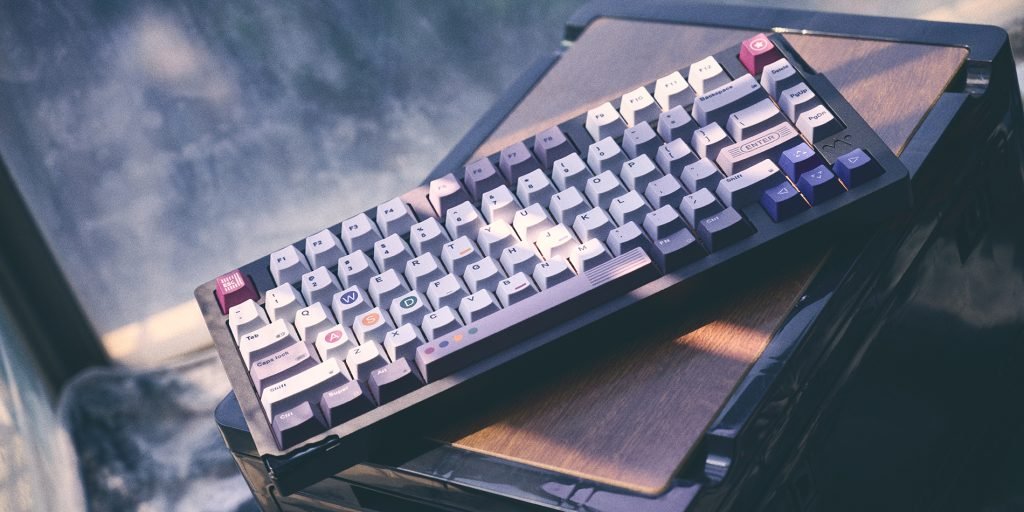
The weight of an aluminum keyboard in your hands feels undeniably premium – that cool metal touch, the satisfying density, the resonant thock with every keystroke. Yet when shopping for one, you’ll find prices ranging from $50 to over $500 for what appears to be the same material.
This price disparity isn’t arbitrary. Behind every aluminum keyboard lies a complex interplay of:
We’re not here to declare what’s “worth it” – but to give you the knowledge to decide for yourself.
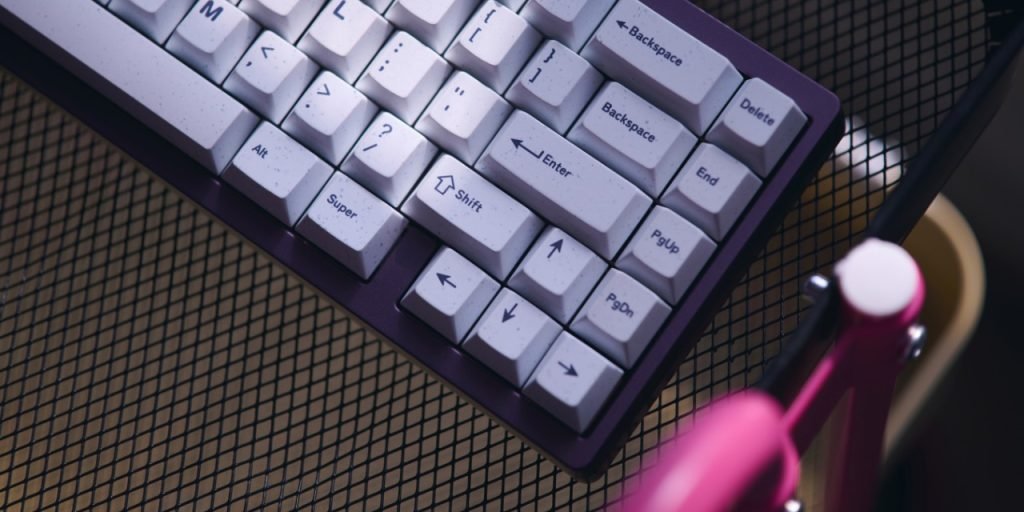
The foundation of every keyboard’s personality begins with its casing material – a decision that impacts everything from sound signature to desktop presence. While aluminum has gained prestige among enthusiasts, plastic remains a versatile contender through continuous innovation.
Aluminum’s density (2.7 g/cm³) creates inherent qualities that plastic struggles to replicate. The additional mass provides exceptional stability, transforming vibrations into those deep, resonant tones mechanical keyboard lovers describe as “thock.” This isn’t just about sound – the material’s thermal conductivity provides that distinctive cool-to-the-touch feel, while premium anodized finishes develop a unique patina over time, telling the story of your keyboard’s journey.
Modern engineering has dramatically narrowed the gap between materials. Through what Chinese enthusiasts humorously call “疯狂填充” (obsessive filling), plastic keyboards now employ:
These innovations allow plastic cases to achieve acoustic profiles approaching aluminum’s signature depth. Where plastic truly excels is design freedom – injection molding enables complex shapes, translucent finishes, and ergonomic forms that would be cost-prohibitive in metal.
That satisfying heft of aluminum comes with practical tradeoffs. While the extra mass (typically 800g vs 2.5kg) provides desktop stability, it reduces portability – a genuine consideration for traveling professionals. Plastic’s lighter nature allows for easy repositioning and transport, though potentially at the cost of typing stability during intense sessions.
This isn’t a simple hierarchy of quality. The choice represents different philosophies:
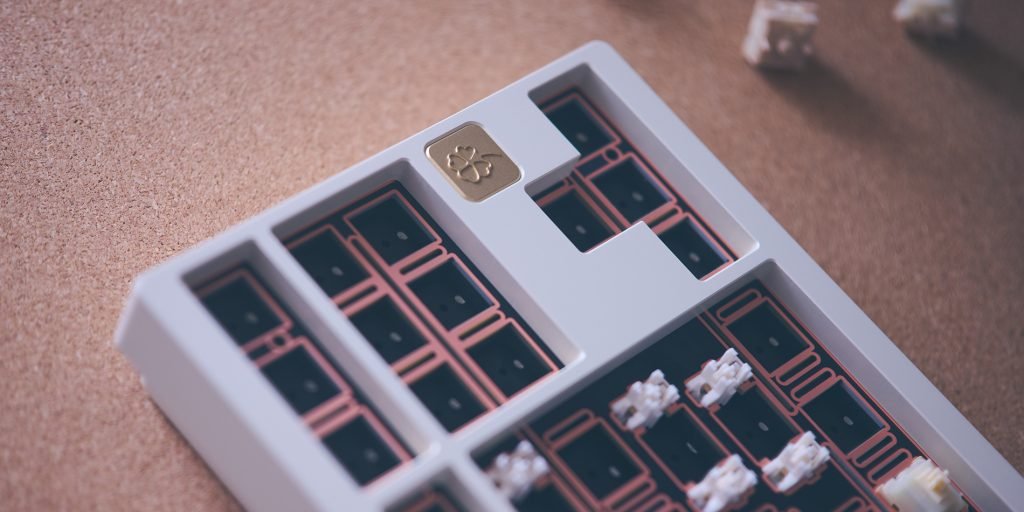
Aluminum keyboards may look similar at first glance, but their manufacturing paths couldn’t be more different. The way a case is made can easily turn a $50 frame into a $300 masterpiece – not because of arbitrary markups, but because of the time, precision, and labor invested.
Entry-level aluminum keyboards often start with die casting, where molten metal is poured into a mold and then lightly refined. This method is fast and cost-effective, but it leaves a relatively rough surface that requires additional finishing to achieve a premium feel. On the other end of the spectrum, CNC milling starts with a solid aluminum block, carving out the case layer by layer. Every pass of the cutting tool costs both time and precision – the more complex the shape, the longer the machine runs, and the higher the cost.
A minimalist, boxy case can be cut in hours, while a design featuring subtle curves, chamfered edges, or intricate contours may take two to three times as long. CNC machining doesn’t scale linearly with detail: each curve, beveled edge, or custom profile exponentially adds cost due to tool changes, slower feed rates, and post-processing requirements.
Some modern designs combine aluminum plates or pre-shaped sections with CNC-milled parts. While these hybrids can reduce machining time and cost, they often trade a small degree of seamlessness for affordability. What looks like a “simple rectangle” on your desk may hide dozens of precision-cut components beneath the surface, each contributing to the overall price tag.
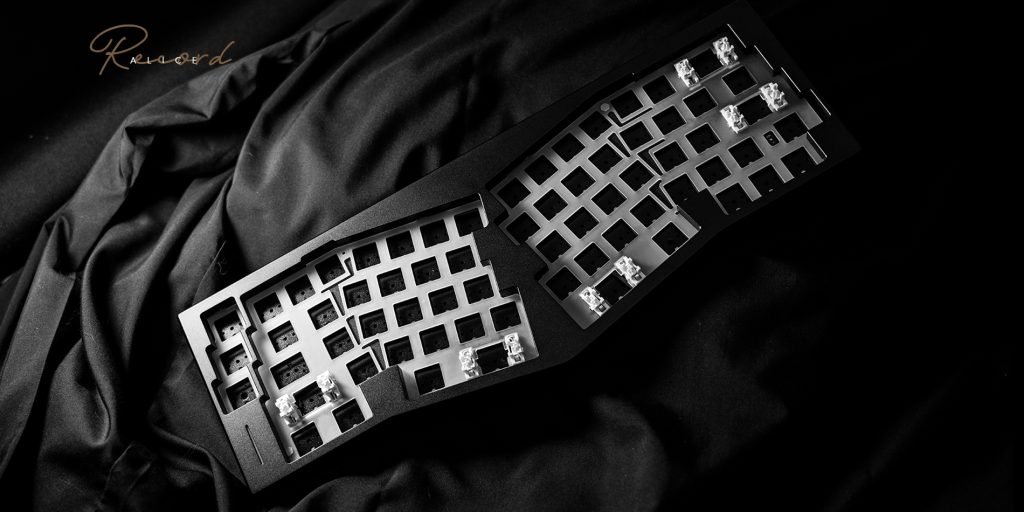
If CNC defines the skeleton of a premium keyboard, surface finishing is its skin – the final layer of refinement that turns raw metal into something you can’t help but touch.
Powder coating and standard paint finishes are cost-efficient and offer decent color consistency, but they struggle to achieve the same tactile smoothness and metallic luster as anodizing. Anodized aluminum not only enhances corrosion resistance but also creates a satin-like feel that screams quality. High-end finishes involve multiple stages of sanding and bead blasting to achieve a uniform texture before the anodizing process even begins.
The difference between a $150 board and a $400 board is often felt before it’s seen. Fine-grain blasting – using ceramic, glass, or zirconium beads – produces a velvety matte surface. These materials are expensive and wear out quickly, driving up production costs. When you run your fingers over a smooth, almost silky surface, you’re feeling hours of extra preparation that cheaper finishes simply skip.
In bead blasting, the term “grit” (or “mesh”) describes the fineness of the abrasive particles used to texture the surface. A 180-grit finish already provides a smooth, matte look, but 220-grit goes further, creating an ultra-fine texture that feels almost silky to the touch. While the difference might seem subtle, enthusiasts can often see and feel the refinement – especially under direct light or when running a finger across the case.
The trade-off? Finer grit means more blasting time, greater material wear, and higher operational costs. This is one of the reasons why keyboards with a 220-grit finish often sit in the higher price bracket.
Some manufacturers use electrophoresis for an ultra-thin, uniform coating that resists scratches better than traditional paints. Others push even further by layering anodizing beneath a specialized coating, combining durability with color depth. These treatments are expensive because they require precise chemical control and meticulous quality checks – but the result is a finish that can last for decades with proper care.
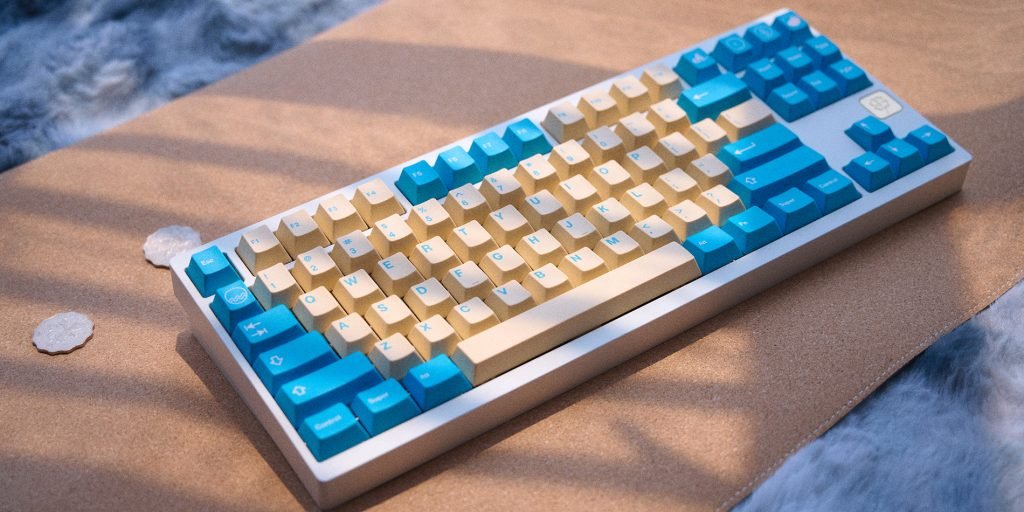
When comparing two aluminum keyboards side by side, the price difference isn’t always visible on the surface. Much of the cost lies in the engineering decisions hidden within the case – details you might never see unless you take the board apart.
Premium aluminum keyboards are meticulously designed for acoustics. Internal chambers are optimized to reduce unwanted vibrations and produce that deep, satisfying “thock” sound that enthusiasts love. Layers of silicone, PORON foam, or custom dampening inserts are often carefully placed to control resonance. In contrast, budget models may skip these steps or rely on simpler, less consistent solutions.
The way the key plate attaches to the case dramatically influences both typing feel and production complexity. Advanced designs might feature gasket mounts, quick-swap plates, or dual-layer structures to fine-tune flexibility and sound. These innovations require precision engineering, custom tooling, and additional assembly time, all of which add cost – but also elevate the typing experience.
The quality of unseen components, like the alignment of screw threads, PCB thickness, or even the precision of stabilizer cutouts, separates a premium product from a budget alternative. Smooth edges, perfectly aligned joints, and flawless tolerances demand time and skill – small details that turn a keyboard from a simple tool into a tactile instrument.
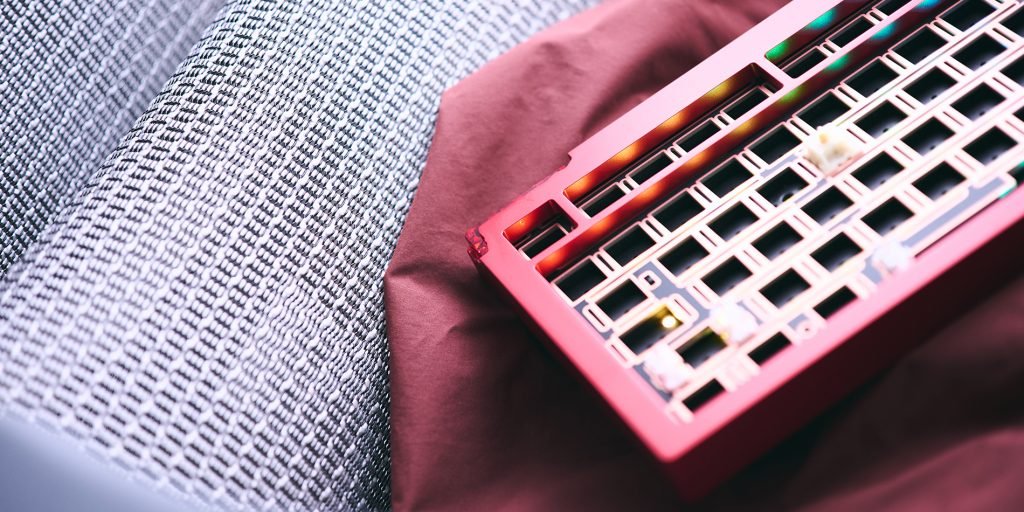
Aluminum keyboards often occupy the same mental space as high-end watches or luxury cars. Two products may perform the same basic function, yet the premium option exists to deliver an experience rather than just a utility.
Typing on a well-crafted aluminum keyboard is as much about feeling as it is about function. The cool touch of the metal, the satisfying sound, and the smooth finish all create a sense of personal satisfaction. This emotional value – the pride in owning something finely made – often justifies a higher price for many enthusiasts.
Not every user needs a fully custom, CNC-sculpted keyboard with a $500 price tag. For some, a simple but well-finished aluminum case can deliver all the stability and feel they desire. For others, the investment in advanced mounting systems and premium finishes is worth every penny. The key is understanding what aspects matter to you – whether it’s sound, aesthetics, or that intangible sense of quality – and choosing a keyboard that aligns with both your preferences and budget.
Aluminum keyboards are more than just typing tools – they’re a blend of engineering precision, material science, and personal preference. From the machining hours hidden behind a sleek chassis to the finishing techniques that transform raw metal into a tactile delight, every detail shapes both cost and experience.
Yet value isn’t always about paying more; it’s about finding the right balance between craftsmanship, features, and what truly matters to you. Whether you’re drawn to the resonance of a well-tuned aluminum case or the creative freedom of other materials, the best choice is one that enhances your daily experience.
At Weikav, we believe in bringing clarity to these decisions, combining thoughtful design with practical performance. When you understand the science behind the cost, each keystroke becomes more than a click – it becomes a statement of quality.
